EditorialCreativeSportKollektionenVideos
Preise
0Anmelden

Visuelle Inhalte für Profis.
800 Mio.+ Bilder und Videos.

Content-Hub

  • Aktuelle Ereignisse
  • Bilder des Jahres
  • Sport
  • Editorial
  • Creative
  • Kollektionen
  • Videos

Angebote

  • Preise & Pakete
  • Aktionen
  • Enterprise
  • Newsletter
  • Blog
  • The Game Magazine

Services

  • Bildrecherche
  • Auftragsfotografie
  • API & FTP Push
  • my-picturemaxx
  • Partner werden

Unternehmen

  • Über IMAGO
  • Karriere
  • News

Hilfe-Center

  • FAQ
  • Kontakt
ImpressumNutzungsbedingungenLizenzinformationenDatenschutzDatenschutzeinstellungen
© 2026 IMAGO
CEPICBAPLABVPA
Zurück zu den Kollektionen

Das europäische Weltraumlabor «Spacelab» startet ins All, 40. Jahrestag am 28. November

28.11.2023

Die folgenden Fotos wurden von der IMAGO Bildredaktion zu diesem Thema für Sie ausgewählt. Für weitere Bilder nutzen Sie bitte die Suchfunktion.
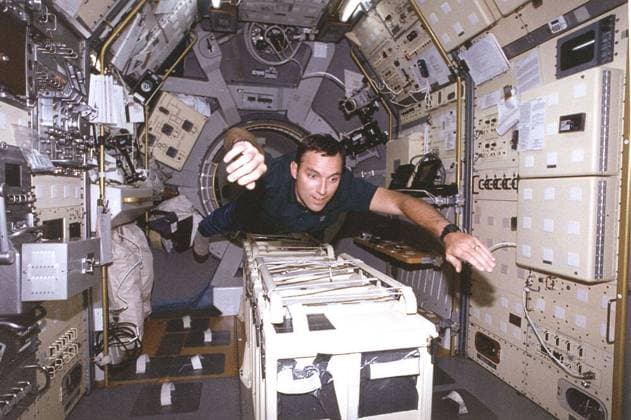
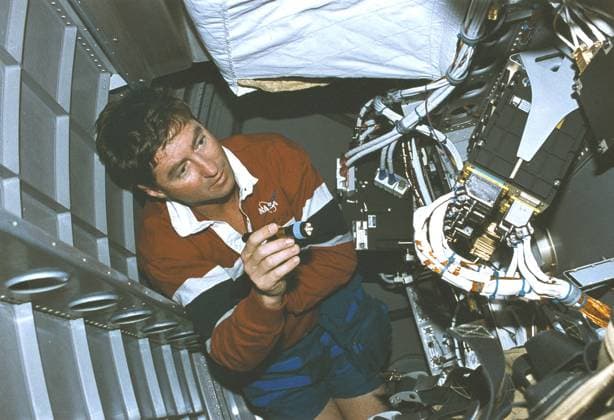
  • Astronaut Carl E. Walz, mission specialist, flies through the second International Microgravity Laboratory (IML-2) science module, STS-65 mission. IML was dedicated to study fundamental materials and life sciences in a microgravity environment inside Spacelab, a laboratory carried aloft by the Shuttle. The mission explored how life forms adapt to weightlessness and investigated how materials behave when processed in space. The IML program gave a team of scientists from around the world access to a unique environment, one that is free from most of Earth s gravity. Managed by the NASA Marshall Space Flight Center, the 14-nation European Space Agency (ESA), the Canadian Space Agency (SCA), the French National Center for Space Studies (CNES), t Copyright: xpiemagsx piemagsspace-160931 !ACHTUNG AUFNAHMEDATUM GESCHÄTZT!
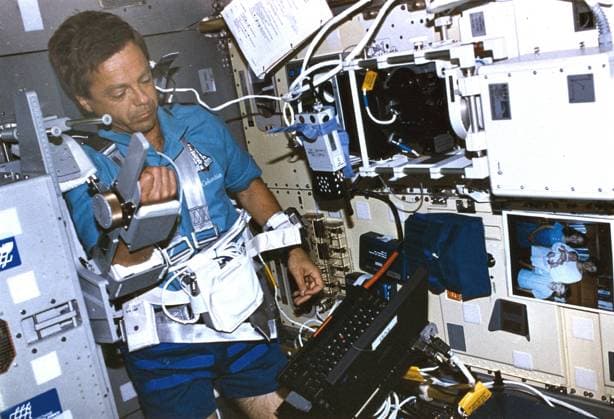
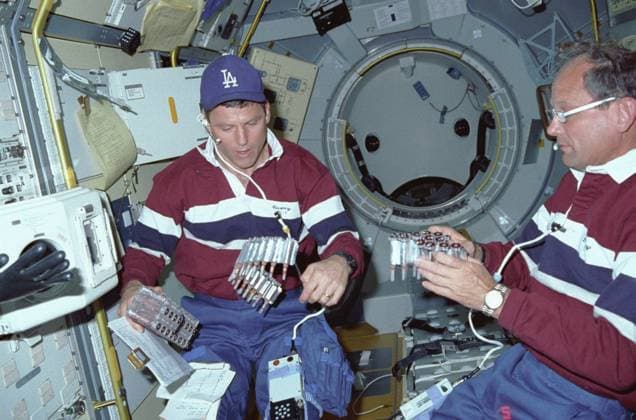
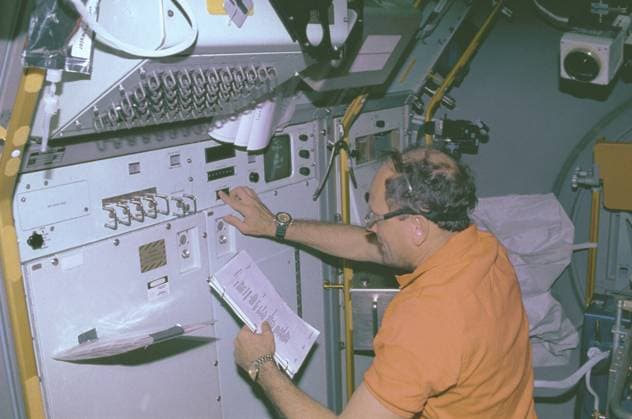
  • The IML-1 mission was the first in a series of Shuttle flights dedicated to fundamental materials and life sciences research with the international partners. The participating space agencies included NASA, the 14-nation European Space Agency (ESA), the Canadian Space Agency (CSA), The French National Center of Space Studies (CNES), the German Space Agency and the German Aerospace Research Establishment (DAR DLR), and the National Space Development Agency of Japan (NASDA). Dedicated to the study of life and materials sciences in microgravity, the IML missions explored how life forms adapt to weightlessness and investigated how materials behave when processed in space. Both life and materials sciences benefited from the extended periods of mi Copyright: xpiemagsx piemagsspace-21856 !ACHTUNG AUFNAHMEDATUM GESCHÄTZT!
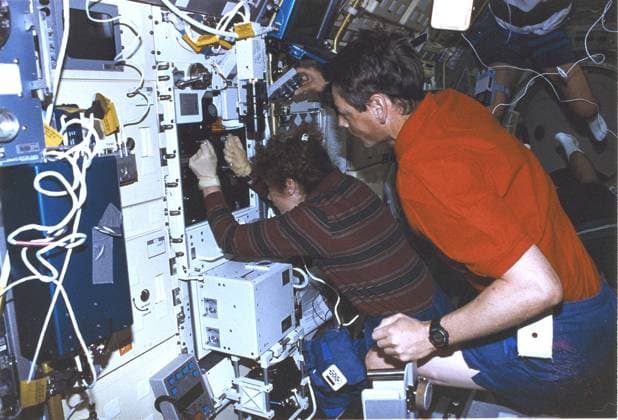
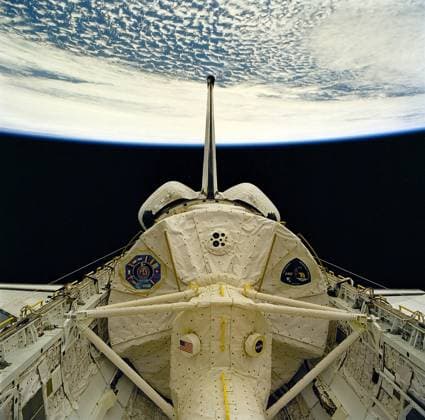
  • Launched on June 20, 1996, the STS-78 mission™s primary payload was the Life and Microgravity Spacelab (LMS), which was managed by the Marshall Space Flight Center (MSFC). During the 17 day space flight, the crew conducted a diverse slate of experiments divided into a mix of life science and microgravity investigations. In a manner very similar to future International Space Station operations, LMS researchers from the United States and their European counterparts shared resources such as crew time and equipment. Five space agencies (NASA USA, European Space Agency Europe (ESA), French Space Agency France, Canadian Space Agency Canada, and Italian Space Agency Italy) along with research scientists from 10 countries worked together on the Copyright: xpiemagsx piemagsspace-38107 !ACHTUNG AUFNAHMEDATUM GESCHÄTZT!
  • Launched on June 20, 1996, the STS-78 mission™s primary payload was the Life and Microgravity Spacelab (LMS), which was managed by the Marshall Space Flight Center (MSFC). During the 17 day space flight, the crew conducted a diverse slate of experiments divided into a mix of life science and microgravity investigations. In a manner very similar to future International Space Station operations, LMS researchers from the United States and their European counterparts shared resources such as crew time and equipment. Five space agencies (NASA USA, European Space Agency Europe (ESA), French Space Agency France, Canadian Space Agency Canada, and Italian Space Agency Italy) along with research scientists from 10 countries worked together on the Copyright: xpiemagsx piemagsspace-38108 !ACHTUNG AUFNAHMEDATUM GESCHÄTZT!
  • Launched on June 20, 1996, the STS-78 mission™s primary payload was the Life and Microgravity Spacelab (LMS), which was managed by the Marshall Space Flight Center (MSFC). During the 17 day space flight, the crew conducted a diverse slate of experiments divided into a mix of life science and microgravity investigations. In a manner very similar to future International Space Station operations, LMS researchers from the United States and their European counterparts shared resources such as crew time and equipment. Five space agencies (NASA USA, European Space Agency Europe (ESA), French Space Agency France, Canadian Space Agency Canada, and Italian Space Agency Italy) along with research scientists from 10 countries worked together on the Copyright: xpiemagsx piemagsspace-38106 !ACHTUNG AUFNAHMEDATUM GESCHÄTZT!
  • Launched on June 20, 1996, the STS-78 mission™s primary payload was the Life and Microgravity Spacelab (LMS), which was managed by the Marshall Space Flight Center (MSFC). During the 17 day space flight, the crew conducted a diverse slate of experiments divided into a mix of life science and microgravity investigations. In a manner very similar to future International Space Station operations, LMS researchers from the United States and their European counterparts shared resources such as crew time and equipment. Five space agencies (NASA USA, European Space Agency Europe (ESA), French Space Agency France, Canadian Space Agency Canada, and Italian Space Agency Italy) along with research scientists from 10 countries worked together on the Copyright: xpiemagsx piemagsspace-38104 !ACHTUNG AUFNAHMEDATUM GESCHÄTZT!
  • International Microgravity Laboratory-1 (IML-1) was the first in a series of Shuttle flights dedicated to fundamental materials and life sciences research with the international partners. The participating space agencies included NASA, the 14-nation European Space Agency (ESA), the Canadian Space Agency (CSA), the French National Center of Space Studies (CNES), the German Space Agency and the German Aerospace Research Establishment (DAR DLR), and the National Space Development Agency of Japan (NASDA). Dedicated to the study of life and materials sciences in microgravity, the IML missions explored how life forms adapt to weightlessness and investigated how materials behave when processed in space. Both life and materials sciences benefited f Copyright: xpiemagsx piemagsspace-21847 !ACHTUNG AUFNAHMEDATUM GESCHÄTZT!
  • Launched on June 20, 1996, the STS-78 mission™s primary payload was the Life and Microgravity Spacelab (LMS), which was managed by the Marshall Space Flight Center (MSFC). During the 17 day space flight, the crew conducted a diverse slate of experiments divided into a mix of life science and microgravity investigations. In a manner very similar to future International Space Station operations, LMS researchers from the United States and their European counterparts shared resources such as crew time and equipment. Five space agencies (NASA USA, European Space Agency Europe (ESA), French Space Agency France, Canadian Space Agency Canada, and Italian Space Agency Italy) along with research scientists from 10 countries worked together on the Copyright: xpiemagsx piemagsspace-38101 !ACHTUNG AUFNAHMEDATUM GESCHÄTZT!
  • The IML-1 mission was the first in a series of Shuttle flights dedicated to fundamental materials and life sciences research with the international partners. The participating space agencies included NASA, the 14-nation European Space Agency (ESA), the Canadian Space Agency (CSA), the French National Center of Space Studies (CNES), the German Space Agency and the German Aerospace Research Establishment (DAR DLR), and the National Space Development Agency of Japan (NASDA). Dedicated to the study of life and materials sciences in microgravity, the IML missions explored how life forms adapt to weightlessness and investigated how materials behave when processed in space. Both life and materials sciences benefited from the extended periods of mi Copyright: xpiemagsx piemagsspace-21848 !ACHTUNG AUFNAHMEDATUM GESCHÄTZT!
  • Launched on June 20, 1996, the STS-78 mission™s primary payload was the Life and Microgravity Spacelab (LMS), which was managed by the Marshall Space Flight Center (MSFC). During the 17 day space flight, the crew conducted a diverse slate of experiments divided into a mix of life science and microgravity investigations. In a manner very similar to future International Space Station operations, LMS researchers from the United States and their European counterparts shared resources such as crew time and equipment. Five space agencies (NASA USA, European Space Agency Europe (ESA), French Space Agency France, Canadian Space Agency Canada, and Italian Space Agency Italy) along with research scientists from 10 countries worked together on the Copyright: xpiemagsx piemagsspace-38100 !ACHTUNG AUFNAHMEDATUM GESCHÄTZT!
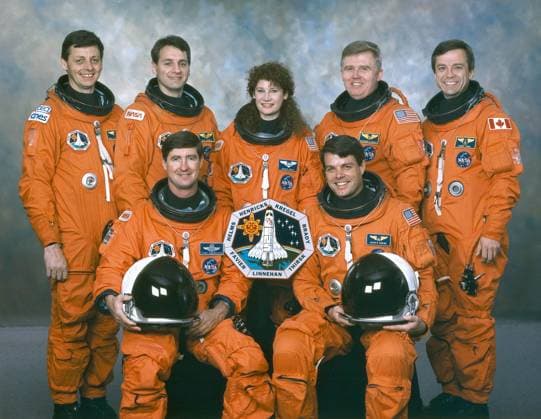
  • The crew assigned to the STS-78 mission included (seated left to right) Terrence T. (Tom) Henricks, commander; and Kevin R. Kregel, pilot. Standing, left to right, are Jean-Jacques Favier (CNES), payload specialist; Richard M. Linneham, mission specialist; Susan J. Helms, payload commander; Charles E. Brady, mission specialist; and Robert Brent Thirsk (CSA). Launched aboard the Space Shuttle Columbia on June 20, 1996 at 10 49 00 am (EDT), the STS-78 mission™s primary payloads was the Life and Microgravity Spacelab (LMS). Five space agencies (NASA USA, European Space Agency Europe (ESA), French Space Agency France, Canadian Space Agency Canada, and Italian Space Agency Italy) along with research scientists from 10 countries worked togethe Copyright: xpiemagsx piemagsspace-36232 !ACHTUNG AUFNAHMEDATUM GESCHÄTZT!
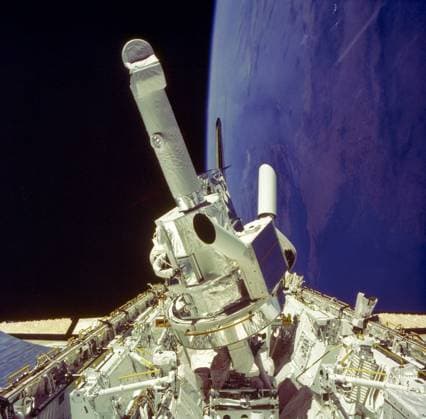
  • This photograph shows the Instrument Pointing System (IPS) for Spacelab-2 being deployed in the cargo bay of the Space Shuttle Orbiter Challenger. The European Space Agency (ESA) developed this irnovative pointing system for the Spacelab program. Previously, instruments were pointed toward particular celestial objects or areas by maneuvering the Shuttle to an appropriate attitude. The IPS could aim instruments more accurately than the Shuttle and kept them fixed on a target as the Shuttle moved. On the first pallet, three solar instruments and one atmospheric instrument were mounted on the IPS. Spacelab-2 was the first pallet-only mission. One of the goals of the mission was to verify that the pallets configuration was satisfactory for obs Copyright: xpiemagsx piemagsspace-22243 !ACHTUNG AUFNAHMEDATUM GESCHÄTZT!
  • Launched on June 20, 1996, the STS-78 mission™s primary payload was the Life and Microgravity Spacelab (LMS), which was managed by the Marshall Space Flight Center (MSFC). During the 17 day space flight, the crew conducted a diverse slate of experiments divided into a mix of life science and microgravity investigations. In a manner very similar to future International Space Station operations, LMS researchers from the United States and their European counterparts shared resources such as crew time and equipment. Five space agencies (NASA USA, European Space Agency Europe (ESA), French Space Agency France, Canadian Space Agency Canada, and Italian Space Agency Italy) along with research scientists from 10 countries worked together on the Copyright: xpiemagsx piemagsspace-38109 !ACHTUNG AUFNAHMEDATUM GESCHÄTZT!
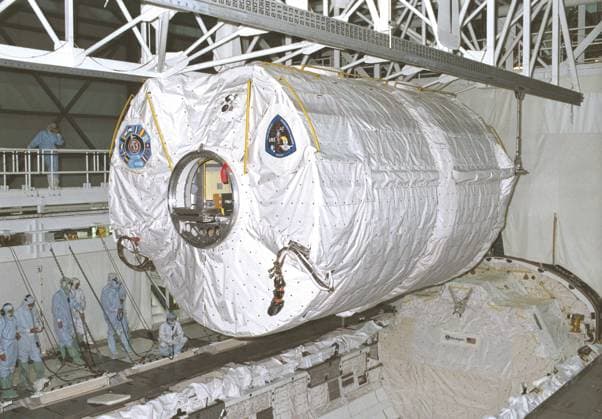
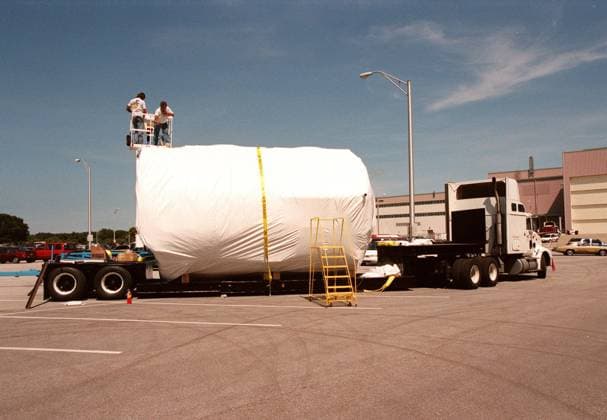
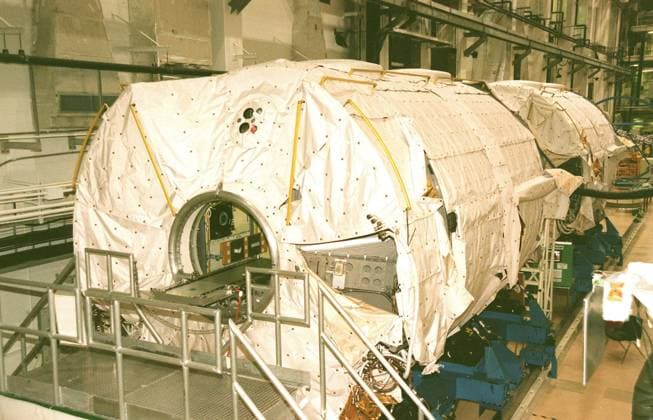
  • Spacelab is wrapped and ready for transport to the National Air and Space Museum in Washington, DC. Spacelab was designed by the European Space Agency (ESA) for the Space Shuttle program and first flew on STS-9 in November 1983. Its final flight was the STS-90 Neurolab mission in April 1998. A sister module will travel home and be placed on display in Europe. The Spacelab concept of modular experiment racks in a pressurized shirt-sleeve environment made it highly user-friendly and accessible. Numerous experiments conceived by hundreds of scientists on the ground were conducted by flight crews in orbit. Spacelab modules served as on-orbit homes for everything from squirrel monkeys to plant seeds. They supported astronomical as well as Earth Copyright: xpiemagsx piemagsspace-8287 !ACHTUNG AUFNAHMEDATUM GESCHÄTZT!
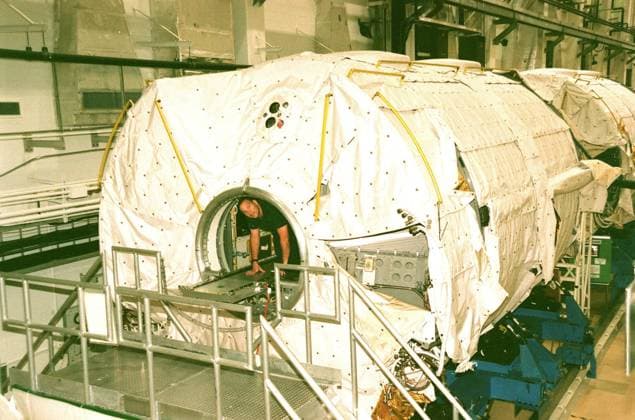
  • Jim Dumoulin, NASA Payload Electrical Systems engineer, crawls out of the Spacelab module for the last time after stowing some equipment for its final trip to the National Air and Space Museum in Washington, DC. He has worked on the Spacelab program since its first launch on STS-9 in November 1983 as part of the NASA Civil Service Level IV experiment integration team. Spacelab was designed by the European Space Agency (ESA) for the Space Shuttle program. Its final flight was the STS-90 Neurolab mission in April 1998. The Spacelab concept of modular experiment racks in a pressurized shirt-sleeve environment made it highly user-friendly and accessible. Numerous experiments conceived by hundreds of scientists on the ground were conducted by fl Copyright: xpiemagsx piemagsspace-8247 !ACHTUNG AUFNAHMEDATUM GESCHÄTZT!
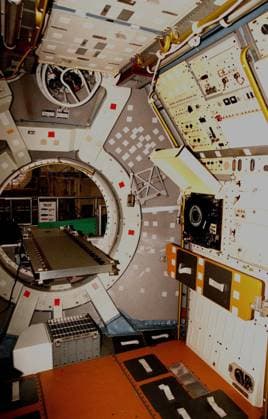
  • KENNEDY SPACE CENTER, FLA. -- A closeup view of the hatch to this Spacelab module shows an empty interior as the module is being prepared in the Operations & Checkout Building for shipment to the National Air and Space Museum in Washington, DC. Visible on the floor are the foot restraints used by astronauts to keep them stationary while conducting experiments. Spacelab was designed by the European Space Agency (ESA) for the Space Shuttle program. It first flew on STS-9 in November 1983 and its final flight was the STS-90 Neurolab mission in April 1998. The Spacelab concept of modular experiment racks in a pressurized shirt-sleeve environment made it highly user-friendly and accessible. Numerous experiments conceived by hundreds of scientis Copyright: xpiemagsx piemagsspace-8246 !ACHTUNG AUFNAHMEDATUM GESCHÄTZT!
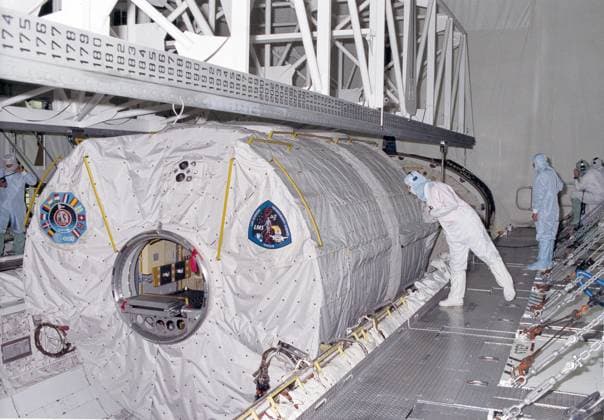
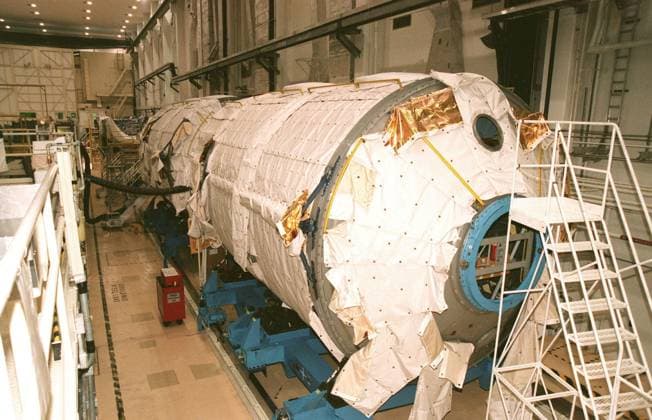
  • KENNEDY SPACE CENTER, FLA. -- Two Spacelab modules (end to end) are made ready in the Operations and Checkout Building for shipment to the National Air and Space Museum in Washington, DC. Spacelab was designed by the European Space Agency (ESA) for the Space Shuttle program and first flew on STS-9 in November 1983. Its final flight was the STS-90 Neurolab mission in April 1998. The sister module (first in line) will travel home and be placed on display in Europe. The Spacelab concept of modular experiment racks in a pressurized shirt-sleeve environment made it highly user-friendly and accessible. Numerous experiments conceived by hundreds of scientists on the ground were conducted by flight crews in orbit. Spacelab modules served as on-orbi Copyright: xpiemagsx piemagsspace-8232 !ACHTUNG AUFNAHMEDATUM GESCHÄTZT!
  • Spacelab Module MD001 (foreground) and its sister module (behind it) are prepared for shipment to the National Air and Space Museum in Washington, DC. Spacelab was designed by the European Space Agency (ESA) for the Space Shuttle program. It first flew on STS-9 in November 1983 and its final flight was the STS-90 Neurolab mission in April 1998. The sister module will travel home and be placed on display in Europe. The Spacelab concept of modular experiment racks in a pressurized shirt-sleeve environment made it highly user-friendly and accessible. Numerous experiments conceived by hundreds of scientists on the ground were conducted by flight crews in orbit. Spacelab modules served as on-orbit homes for everything from squirrel monkeys to pl Copyright: xpiemagsx piemagsspace-8231 !ACHTUNG AUFNAHMEDATUM GESCHÄTZT!
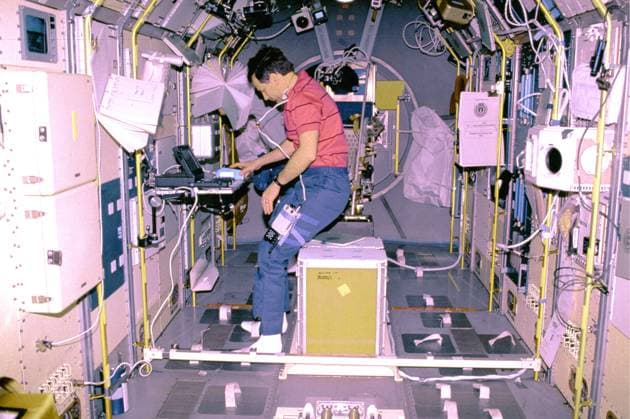
  • Viewed looking forward, this Spacelab module is empty now, being prepared in the Operations & Checkout Building for shipment to the National Air and Space Museum in Washington, DC. Visible on the floor are the foot restraints used by astronauts to keep them stationary while conducting experiments. Spacelab was designed by the European Space Agency (ESA) for the Space Shuttle program. It first flew on STS-9 in November 1983 and its final flight was the STS-90 Neurolab mission in April 1998. The Spacelab concept of modular experiment racks in a pressurized shirt-sleeve environment made it highly user-friendly and accessible. Numerous experiments conceived by hundreds of scientists on the ground were conducted by flight crews in orbit. Spacela Copyright: xpiemagsx piemagsspace-8229 !ACHTUNG AUFNAHMEDATUM GESCHÄTZT!
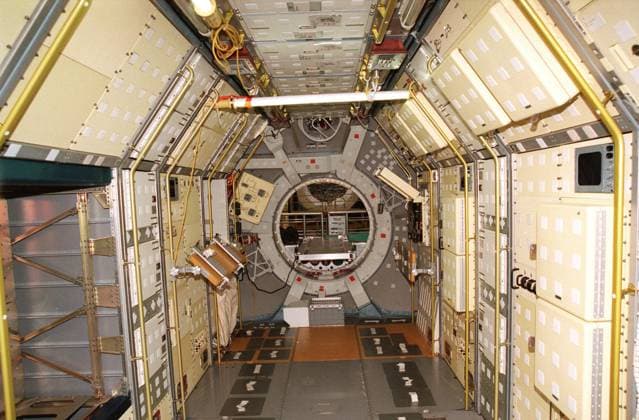
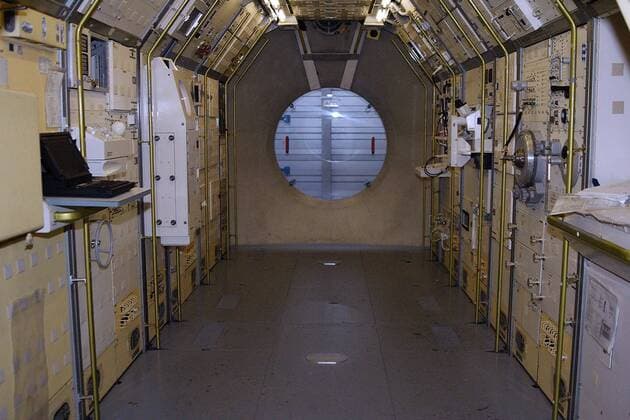
  • Im Inneren eines Spacelab-Simulators des DLR im Europäischen Astronauten Zentrum der ESA in Köln
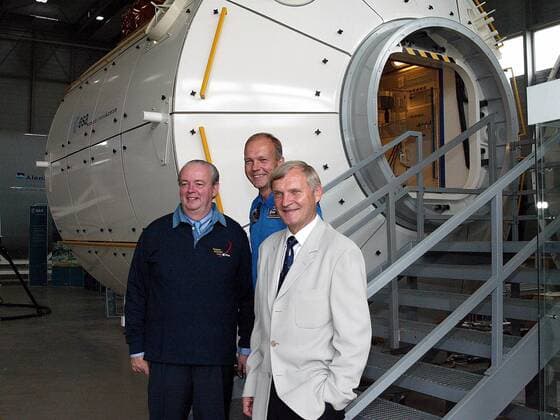
  • V.l.n.r.: Ralf Bernd Assenmacher (GER Vorsitzender Geschäftsführer der Kölnarena), Hans Schlegel (GER ESA-Astronaut) und Dr. Ernst Messerschmid (GER Leiter des EAC) stehen vor einem Spacelab-Modell anlässlich eines Pressetermins zur - Nacht der Astronauten - im Europäischen Astronauten Zentrum der ESA in Köln
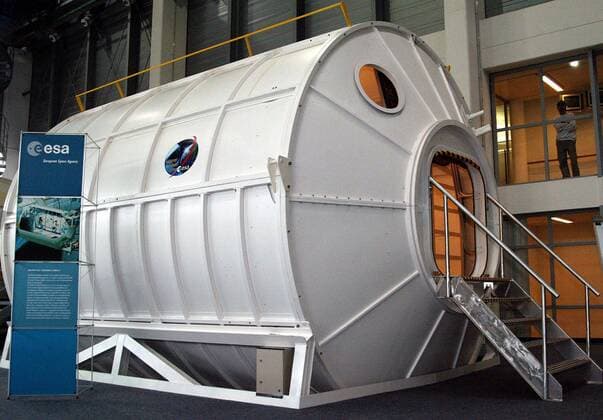
  • Modell eines Spacelabs im Europäischen Astronauten Zentrum der ESA in Köln anlässlich eines Pressetermins zur - Nacht der Astronauten -