EditorialCreativeSportKollektionenVideos
Preise
0Anmelden

Visuelle Inhalte für Profis.
800 Mio.+ Bilder und Videos.

Content-Hub

  • Aktuelle Ereignisse
  • Bilder des Jahres
  • Sport
  • Editorial
  • Creative
  • Kollektionen
  • Videos

Angebote

  • Preise & Pakete
  • Aktionen
  • Enterprise
  • Newsletter
  • Blog
  • The Game Magazine

Services

  • Bildrecherche
  • Auftragsfotografie
  • API & FTP Push
  • my-picturemaxx
  • Partner werden

Unternehmen

  • Über IMAGO
  • Karriere
  • News

Hilfe-Center

  • FAQ
  • Kontakt
ImpressumNutzungsbedingungenLizenzinformationenDatenschutzDatenschutzeinstellungen
© 2026 IMAGO
CEPICBAPLABVPA
  1. Mexiko, Mexiko-Stadt, Suche nach über 500 Skelettresten in Lagunas de La Habana

Mexiko, Mexiko-Stadt, Suche nach über 500 Skelettresten in Lagunas de La Habana

14.04.2026

Die folgenden Fotos wurden von der IMAGO Bildredaktion zu diesem Thema für Sie ausgewählt. Für weitere Bilder nutzen Sie bitte die Suchfunktion.

Bilder in dieser Kollektion
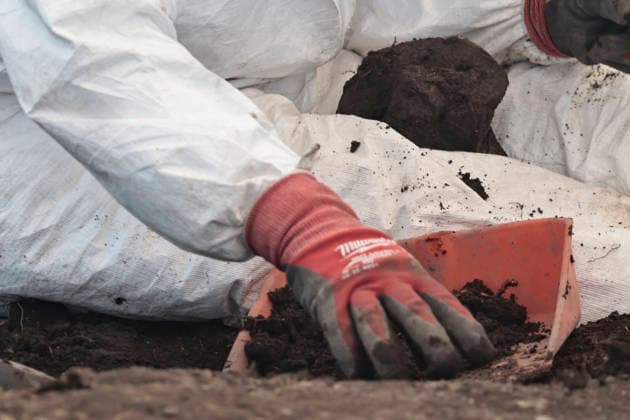
  • April 14, 2026, Mexico City, Cdmx, Mexico: Between the borders of the Tlahuac region of Mexico City and Chalco, State of Mexico, lie the lagoons that divide these areas. Within a particular zone known as Lagunas de La Habana (Havana Lagoons), more than 500 human skeletal remains (teeth and bones from different parts of the body) have been found to date, buried in the mud at a very shallow depth. This is because it is a chinampa (floating garden) area, making it impossible that this area was used as a cemetery. The remains are found at a very shallow depth; after only 20 centimeters, the water reaches the lagoon. The search continues, carried out by personnel from the Attorney General s Offices, police, the National Guard, and the State - ZUMAp204 20260414_zip_p204_041 Copyright: xJosuexPerezx

    April 14, 2026, Mexico City, Cdmx, Mexico: Between the borders of the Tlahuac region of Mexico City and Chalco, State of Mexico, lie the lagoons that divide these areas. Within a particular zone known as Lagunas de La Habana (Havana Lagoons), more than 500 human skeletal remains (teeth and bones from different parts of the body) have been found to date, buried in the mud at a very shallow depth. This is because it is a chinampa (floating garden) area, making it impossible that this area was used as a cemetery. The remains are found at a very shallow depth; after only 20 centimeters, the water reaches the lagoon. The search continues, carried out by personnel from the Attorney General s Offices, police, the National Guard, and the State - ZUMAp204 20260414_zip_p204_041 Copyright: xJosuexPerezx

  • April 14, 2026, Mexico City, Cdmx, Mexico: Between the borders of the Tlahuac region of Mexico City and Chalco, State of Mexico, lie the lagoons that divide these areas. Within a particular zone known as Lagunas de La Habana (Havana Lagoons), more than 500 human skeletal remains (teeth and bones from different parts of the body) have been found to date, buried in the mud at a very shallow depth. This is because it is a chinampa (floating garden) area, making it impossible that this area was used as a cemetery. The remains are found at a very shallow depth; after only 20 centimeters, the water reaches the lagoon. The search continues, carried out by personnel from the Attorney General s Offices, police, the National Guard, and the State - ZUMAp204 20260414_zip_p204_045 Copyright: xJosuexPerezx
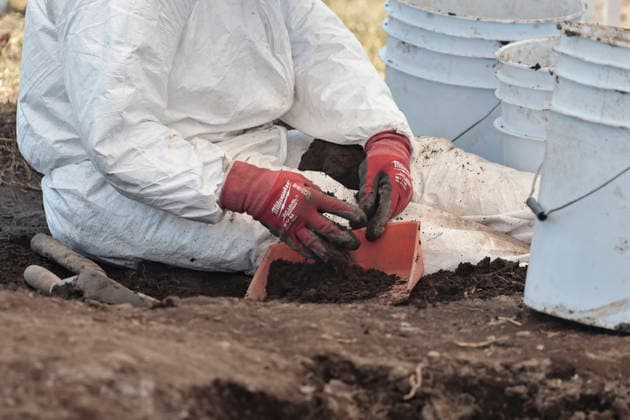
    April 14, 2026, Mexico City, Cdmx, Mexico: Between the borders of the Tlahuac region of Mexico City and Chalco, State of Mexico, lie the lagoons that divide these areas. Within a particular zone known as Lagunas de La Habana (Havana Lagoons), more than 500 human skeletal remains (teeth and bones from different parts of the body) have been found to date, buried in the mud at a very shallow depth. This is because it is a chinampa (floating garden) area, making it impossible that this area was used as a cemetery. The remains are found at a very shallow depth; after only 20 centimeters, the water reaches the lagoon. The search continues, carried out by personnel from the Attorney General s Offices, police, the National Guard, and the State - ZUMAp204 20260414_zip_p204_045 Copyright: xJosuexPerezx

  • April 14, 2026, Mexico City, Cdmx, Mexico: Between the borders of the Tlahuac region of Mexico City and Chalco, State of Mexico, lie the lagoons that divide these areas. Within a particular zone known as Lagunas de La Habana (Havana Lagoons), more than 500 human skeletal remains (teeth and bones from different parts of the body) have been found to date, buried in the mud at a very shallow depth. This is because it is a chinampa (floating garden) area, making it impossible that this area was used as a cemetery. The remains are found at a very shallow depth; after only 20 centimeters, the water reaches the lagoon. The search continues, carried out by personnel from the Attorney General s Offices, police, the National Guard, and the State - ZUMAp204 20260414_zip_p204_040 Copyright: xJosuexPerezx
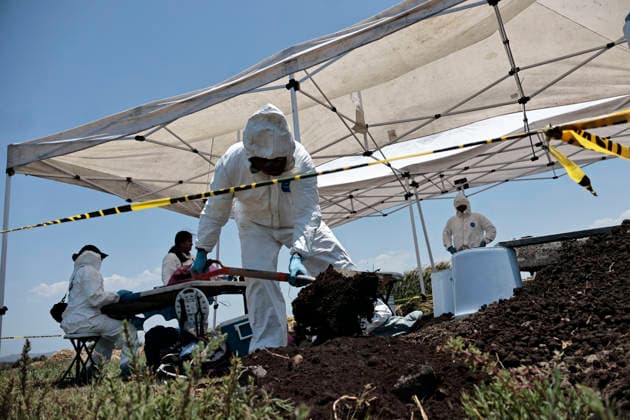
    April 14, 2026, Mexico City, Cdmx, Mexico: Between the borders of the Tlahuac region of Mexico City and Chalco, State of Mexico, lie the lagoons that divide these areas. Within a particular zone known as Lagunas de La Habana (Havana Lagoons), more than 500 human skeletal remains (teeth and bones from different parts of the body) have been found to date, buried in the mud at a very shallow depth. This is because it is a chinampa (floating garden) area, making it impossible that this area was used as a cemetery. The remains are found at a very shallow depth; after only 20 centimeters, the water reaches the lagoon. The search continues, carried out by personnel from the Attorney General s Offices, police, the National Guard, and the State - ZUMAp204 20260414_zip_p204_040 Copyright: xJosuexPerezx

  • April 14, 2026, Mexico City, Cdmx, Mexico: Between the borders of the Tlahuac region of Mexico City and Chalco, State of Mexico, lie the lagoons that divide these areas. Within a particular zone known as Lagunas de La Habana (Havana Lagoons), more than 500 human skeletal remains (teeth and bones from different parts of the body) have been found to date, buried in the mud at a very shallow depth. This is because it is a chinampa (floating garden) area, making it impossible that this area was used as a cemetery. The remains are found at a very shallow depth; after only 20 centimeters, the water reaches the lagoon. The search continues, carried out by personnel from the Attorney General s Offices, police, the National Guard, and the State - ZUMAp204 20260414_zip_p204_039 Copyright: xJosuexPerezx
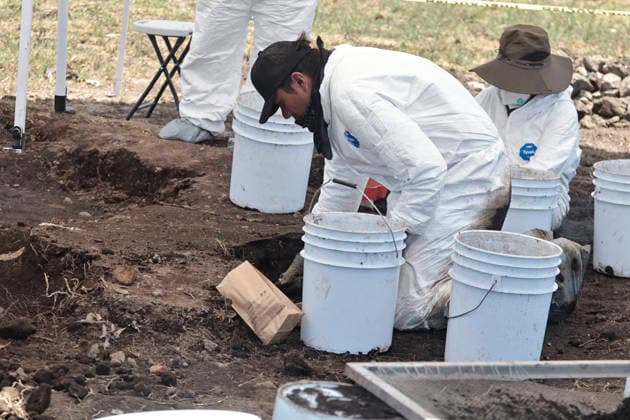
    April 14, 2026, Mexico City, Cdmx, Mexico: Between the borders of the Tlahuac region of Mexico City and Chalco, State of Mexico, lie the lagoons that divide these areas. Within a particular zone known as Lagunas de La Habana (Havana Lagoons), more than 500 human skeletal remains (teeth and bones from different parts of the body) have been found to date, buried in the mud at a very shallow depth. This is because it is a chinampa (floating garden) area, making it impossible that this area was used as a cemetery. The remains are found at a very shallow depth; after only 20 centimeters, the water reaches the lagoon. The search continues, carried out by personnel from the Attorney General s Offices, police, the National Guard, and the State - ZUMAp204 20260414_zip_p204_039 Copyright: xJosuexPerezx

  • April 14, 2026, Mexico City, Cdmx, Mexico: Between the borders of the Tlahuac region of Mexico City and Chalco, State of Mexico, lie the lagoons that divide these areas. Within a particular zone known as Lagunas de La Habana (Havana Lagoons), more than 500 human skeletal remains (teeth and bones from different parts of the body) have been found to date, buried in the mud at a very shallow depth. This is because it is a chinampa (floating garden) area, making it impossible that this area was used as a cemetery. The remains are found at a very shallow depth; after only 20 centimeters, the water reaches the lagoon. The search continues, carried out by personnel from the Attorney General s Offices, police, the National Guard, and the State - ZUMAp204 20260414_zip_p204_034 Copyright: xJosuexPerezx
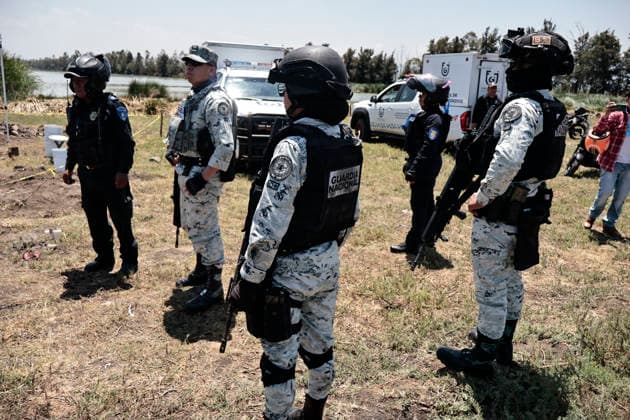
    April 14, 2026, Mexico City, Cdmx, Mexico: Between the borders of the Tlahuac region of Mexico City and Chalco, State of Mexico, lie the lagoons that divide these areas. Within a particular zone known as Lagunas de La Habana (Havana Lagoons), more than 500 human skeletal remains (teeth and bones from different parts of the body) have been found to date, buried in the mud at a very shallow depth. This is because it is a chinampa (floating garden) area, making it impossible that this area was used as a cemetery. The remains are found at a very shallow depth; after only 20 centimeters, the water reaches the lagoon. The search continues, carried out by personnel from the Attorney General s Offices, police, the National Guard, and the State - ZUMAp204 20260414_zip_p204_034 Copyright: xJosuexPerezx

  • April 14, 2026, Mexico City, Cdmx, Mexico: Between the borders of the Tlahuac region of Mexico City and Chalco, State of Mexico, lie the lagoons that divide these areas. Within a particular zone known as Lagunas de La Habana (Havana Lagoons), more than 500 human skeletal remains (teeth and bones from different parts of the body) have been found to date, buried in the mud at a very shallow depth. This is because it is a chinampa (floating garden) area, making it impossible that this area was used as a cemetery. The remains are found at a very shallow depth; after only 20 centimeters, the water reaches the lagoon. The search continues, carried out by personnel from the Attorney General s Offices, police, the National Guard, and the State - ZUMAp204 20260414_zip_p204_028 Copyright: xJosuexPerezx
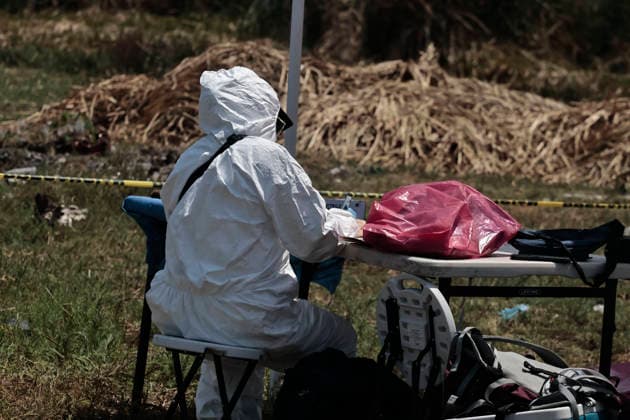
    April 14, 2026, Mexico City, Cdmx, Mexico: Between the borders of the Tlahuac region of Mexico City and Chalco, State of Mexico, lie the lagoons that divide these areas. Within a particular zone known as Lagunas de La Habana (Havana Lagoons), more than 500 human skeletal remains (teeth and bones from different parts of the body) have been found to date, buried in the mud at a very shallow depth. This is because it is a chinampa (floating garden) area, making it impossible that this area was used as a cemetery. The remains are found at a very shallow depth; after only 20 centimeters, the water reaches the lagoon. The search continues, carried out by personnel from the Attorney General s Offices, police, the National Guard, and the State - ZUMAp204 20260414_zip_p204_028 Copyright: xJosuexPerezx

  • April 14, 2026, Mexico City, Cdmx, Mexico: Between the borders of the Tlahuac region of Mexico City and Chalco, State of Mexico, lie the lagoons that divide these areas. Within a particular zone known as Lagunas de La Habana (Havana Lagoons), more than 500 human skeletal remains (teeth and bones from different parts of the body) have been found to date, buried in the mud at a very shallow depth. This is because it is a chinampa (floating garden) area, making it impossible that this area was used as a cemetery. The remains are found at a very shallow depth; after only 20 centimeters, the water reaches the lagoon. The search continues, carried out by personnel from the Attorney General s Offices, police, the National Guard, and the State - ZUMAp204 20260414_zip_p204_024 Copyright: xJosuexPerezx
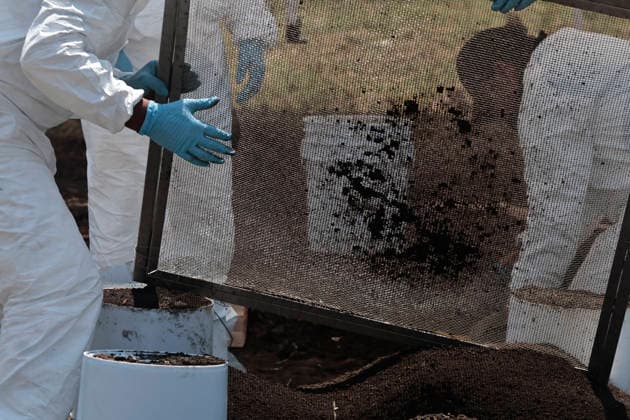
    April 14, 2026, Mexico City, Cdmx, Mexico: Between the borders of the Tlahuac region of Mexico City and Chalco, State of Mexico, lie the lagoons that divide these areas. Within a particular zone known as Lagunas de La Habana (Havana Lagoons), more than 500 human skeletal remains (teeth and bones from different parts of the body) have been found to date, buried in the mud at a very shallow depth. This is because it is a chinampa (floating garden) area, making it impossible that this area was used as a cemetery. The remains are found at a very shallow depth; after only 20 centimeters, the water reaches the lagoon. The search continues, carried out by personnel from the Attorney General s Offices, police, the National Guard, and the State - ZUMAp204 20260414_zip_p204_024 Copyright: xJosuexPerezx

  • April 14, 2026, Mexico City, Cdmx, Mexico: Between the borders of the Tlahuac region of Mexico City and Chalco, State of Mexico, lie the lagoons that divide these areas. Within a particular zone known as Lagunas de La Habana (Havana Lagoons), more than 500 human skeletal remains (teeth and bones from different parts of the body) have been found to date, buried in the mud at a very shallow depth. This is because it is a chinampa (floating garden) area, making it impossible that this area was used as a cemetery. The remains are found at a very shallow depth; after only 20 centimeters, the water reaches the lagoon. The search continues, carried out by personnel from the Attorney General s Offices, police, the National Guard, and the State - ZUMAp204 20260414_zip_p204_022 Copyright: xJosuexPerezx
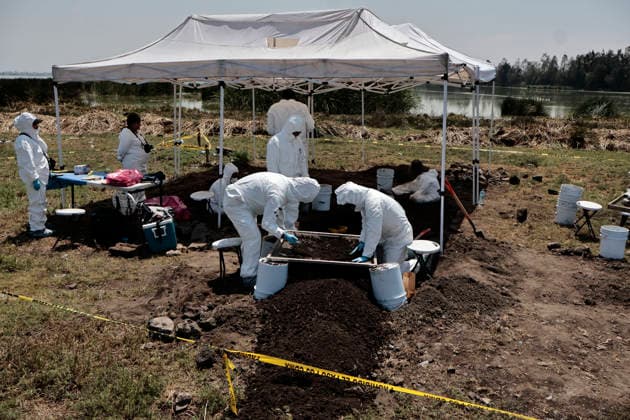
    April 14, 2026, Mexico City, Cdmx, Mexico: Between the borders of the Tlahuac region of Mexico City and Chalco, State of Mexico, lie the lagoons that divide these areas. Within a particular zone known as Lagunas de La Habana (Havana Lagoons), more than 500 human skeletal remains (teeth and bones from different parts of the body) have been found to date, buried in the mud at a very shallow depth. This is because it is a chinampa (floating garden) area, making it impossible that this area was used as a cemetery. The remains are found at a very shallow depth; after only 20 centimeters, the water reaches the lagoon. The search continues, carried out by personnel from the Attorney General s Offices, police, the National Guard, and the State - ZUMAp204 20260414_zip_p204_022 Copyright: xJosuexPerezx

  • April 14, 2026, Mexico City, Cdmx, Mexico: Between the borders of the Tlahuac region of Mexico City and Chalco, State of Mexico, lie the lagoons that divide these areas. Within a particular zone known as Lagunas de La Habana (Havana Lagoons), more than 500 human skeletal remains (teeth and bones from different parts of the body) have been found to date, buried in the mud at a very shallow depth. This is because it is a chinampa (floating garden) area, making it impossible that this area was used as a cemetery. The remains are found at a very shallow depth; after only 20 centimeters, the water reaches the lagoon. The search continues, carried out by personnel from the Attorney General s Offices, police, the National Guard, and the State - ZUMAp204 20260414_zip_p204_021 Copyright: xJosuexPerezx
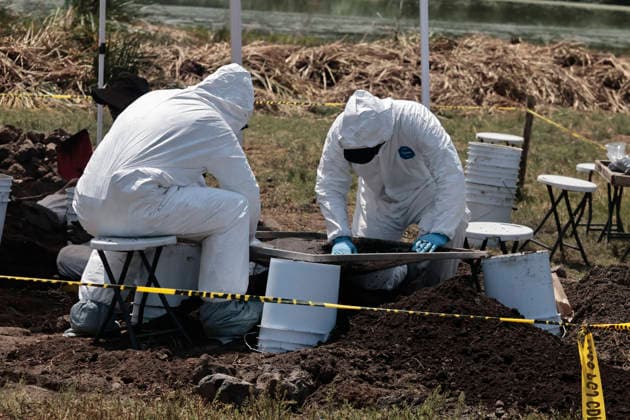
    April 14, 2026, Mexico City, Cdmx, Mexico: Between the borders of the Tlahuac region of Mexico City and Chalco, State of Mexico, lie the lagoons that divide these areas. Within a particular zone known as Lagunas de La Habana (Havana Lagoons), more than 500 human skeletal remains (teeth and bones from different parts of the body) have been found to date, buried in the mud at a very shallow depth. This is because it is a chinampa (floating garden) area, making it impossible that this area was used as a cemetery. The remains are found at a very shallow depth; after only 20 centimeters, the water reaches the lagoon. The search continues, carried out by personnel from the Attorney General s Offices, police, the National Guard, and the State - ZUMAp204 20260414_zip_p204_021 Copyright: xJosuexPerezx

  • April 14, 2026, Mexico City, Cdmx, Mexico: Between the borders of the Tlahuac region of Mexico City and Chalco, State of Mexico, lie the lagoons that divide these areas. Within a particular zone known as Lagunas de La Habana (Havana Lagoons), more than 500 human skeletal remains (teeth and bones from different parts of the body) have been found to date, buried in the mud at a very shallow depth. This is because it is a chinampa (floating garden) area, making it impossible that this area was used as a cemetery. The remains are found at a very shallow depth; after only 20 centimeters, the water reaches the lagoon. The search continues, carried out by personnel from the Attorney General s Offices, police, the National Guard, and the State - ZUMAp204 20260414_zip_p204_018 Copyright: xJosuexPerezx
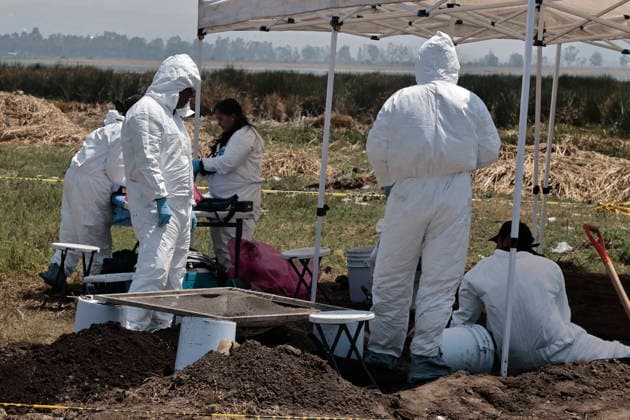
    April 14, 2026, Mexico City, Cdmx, Mexico: Between the borders of the Tlahuac region of Mexico City and Chalco, State of Mexico, lie the lagoons that divide these areas. Within a particular zone known as Lagunas de La Habana (Havana Lagoons), more than 500 human skeletal remains (teeth and bones from different parts of the body) have been found to date, buried in the mud at a very shallow depth. This is because it is a chinampa (floating garden) area, making it impossible that this area was used as a cemetery. The remains are found at a very shallow depth; after only 20 centimeters, the water reaches the lagoon. The search continues, carried out by personnel from the Attorney General s Offices, police, the National Guard, and the State - ZUMAp204 20260414_zip_p204_018 Copyright: xJosuexPerezx

  • April 14, 2026, Mexico City, Cdmx, Mexico: Between the borders of the Tlahuac region of Mexico City and Chalco, State of Mexico, lie the lagoons that divide these areas. Within a particular zone known as Lagunas de La Habana (Havana Lagoons), more than 500 human skeletal remains (teeth and bones from different parts of the body) have been found to date, buried in the mud at a very shallow depth. This is because it is a chinampa (floating garden) area, making it impossible that this area was used as a cemetery. The remains are found at a very shallow depth; after only 20 centimeters, the water reaches the lagoon. The search continues, carried out by personnel from the Attorney General s Offices, police, the National Guard, and the State - ZUMAp204 20260414_zip_p204_016 Copyright: xJosuexPerezx
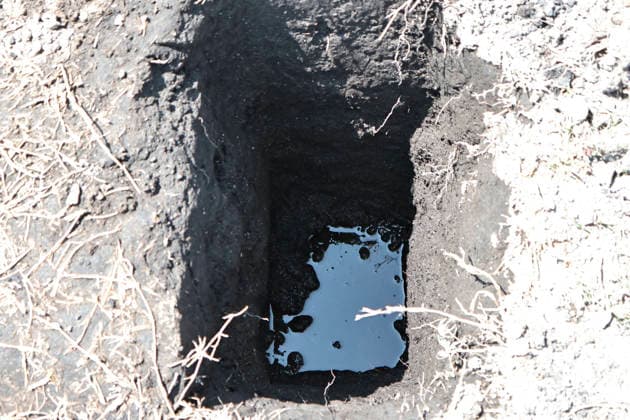
    April 14, 2026, Mexico City, Cdmx, Mexico: Between the borders of the Tlahuac region of Mexico City and Chalco, State of Mexico, lie the lagoons that divide these areas. Within a particular zone known as Lagunas de La Habana (Havana Lagoons), more than 500 human skeletal remains (teeth and bones from different parts of the body) have been found to date, buried in the mud at a very shallow depth. This is because it is a chinampa (floating garden) area, making it impossible that this area was used as a cemetery. The remains are found at a very shallow depth; after only 20 centimeters, the water reaches the lagoon. The search continues, carried out by personnel from the Attorney General s Offices, police, the National Guard, and the State - ZUMAp204 20260414_zip_p204_016 Copyright: xJosuexPerezx

  • April 14, 2026, Mexico City, Cdmx, Mexico: Between the borders of the Tlahuac region of Mexico City and Chalco, State of Mexico, lie the lagoons that divide these areas. Within a particular zone known as Lagunas de La Habana (Havana Lagoons), more than 500 human skeletal remains (teeth and bones from different parts of the body) have been found to date, buried in the mud at a very shallow depth. This is because it is a chinampa (floating garden) area, making it impossible that this area was used as a cemetery. The remains are found at a very shallow depth; after only 20 centimeters, the water reaches the lagoon. The search continues, carried out by personnel from the Attorney General s Offices, police, the National Guard, and the State - ZUMAp204 20260414_zip_p204_012 Copyright: xJosuexPerezx
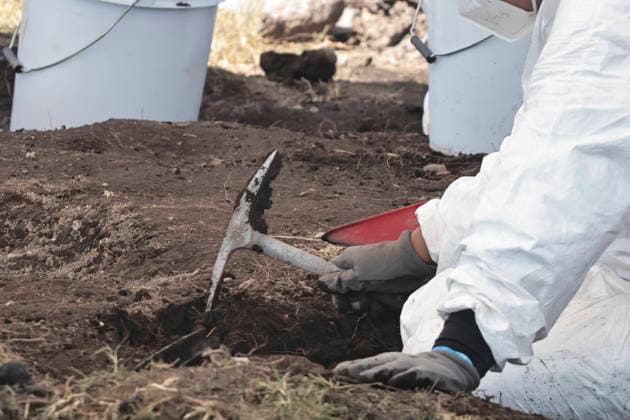
    April 14, 2026, Mexico City, Cdmx, Mexico: Between the borders of the Tlahuac region of Mexico City and Chalco, State of Mexico, lie the lagoons that divide these areas. Within a particular zone known as Lagunas de La Habana (Havana Lagoons), more than 500 human skeletal remains (teeth and bones from different parts of the body) have been found to date, buried in the mud at a very shallow depth. This is because it is a chinampa (floating garden) area, making it impossible that this area was used as a cemetery. The remains are found at a very shallow depth; after only 20 centimeters, the water reaches the lagoon. The search continues, carried out by personnel from the Attorney General s Offices, police, the National Guard, and the State - ZUMAp204 20260414_zip_p204_012 Copyright: xJosuexPerezx

  • April 14, 2026, Mexico City, Cdmx, Mexico: Between the borders of the Tlahuac region of Mexico City and Chalco, State of Mexico, lie the lagoons that divide these areas. Within a particular zone known as Lagunas de La Habana (Havana Lagoons), more than 500 human skeletal remains (teeth and bones from different parts of the body) have been found to date, buried in the mud at a very shallow depth. This is because it is a chinampa (floating garden) area, making it impossible that this area was used as a cemetery. The remains are found at a very shallow depth; after only 20 centimeters, the water reaches the lagoon. The search continues, carried out by personnel from the Attorney General s Offices, police, the National Guard, and the State - ZUMAp204 20260414_zip_p204_009 Copyright: xJosuexPerezx
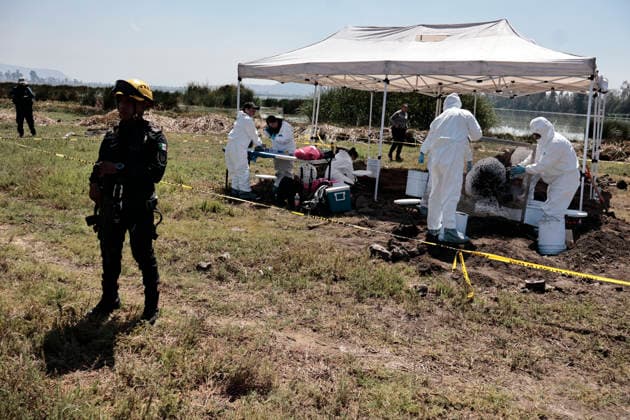
    April 14, 2026, Mexico City, Cdmx, Mexico: Between the borders of the Tlahuac region of Mexico City and Chalco, State of Mexico, lie the lagoons that divide these areas. Within a particular zone known as Lagunas de La Habana (Havana Lagoons), more than 500 human skeletal remains (teeth and bones from different parts of the body) have been found to date, buried in the mud at a very shallow depth. This is because it is a chinampa (floating garden) area, making it impossible that this area was used as a cemetery. The remains are found at a very shallow depth; after only 20 centimeters, the water reaches the lagoon. The search continues, carried out by personnel from the Attorney General s Offices, police, the National Guard, and the State - ZUMAp204 20260414_zip_p204_009 Copyright: xJosuexPerezx

  • April 14, 2026, Mexico City, Cdmx, Mexico: Between the borders of the Tlahuac region of Mexico City and Chalco, State of Mexico, lie the lagoons that divide these areas. Within a particular zone known as Lagunas de La Habana (Havana Lagoons), more than 500 human skeletal remains (teeth and bones from different parts of the body) have been found to date, buried in the mud at a very shallow depth. This is because it is a chinampa (floating garden) area, making it impossible that this area was used as a cemetery. The remains are found at a very shallow depth; after only 20 centimeters, the water reaches the lagoon. The search continues, carried out by personnel from the Attorney General s Offices, police, the National Guard, and the State - ZUMAp204 20260414_zip_p204_008 Copyright: xJosuexPerezx
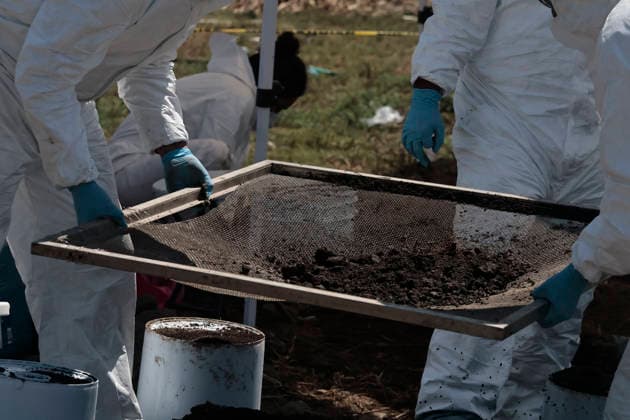
    April 14, 2026, Mexico City, Cdmx, Mexico: Between the borders of the Tlahuac region of Mexico City and Chalco, State of Mexico, lie the lagoons that divide these areas. Within a particular zone known as Lagunas de La Habana (Havana Lagoons), more than 500 human skeletal remains (teeth and bones from different parts of the body) have been found to date, buried in the mud at a very shallow depth. This is because it is a chinampa (floating garden) area, making it impossible that this area was used as a cemetery. The remains are found at a very shallow depth; after only 20 centimeters, the water reaches the lagoon. The search continues, carried out by personnel from the Attorney General s Offices, police, the National Guard, and the State - ZUMAp204 20260414_zip_p204_008 Copyright: xJosuexPerezx

  • April 14, 2026, Mexico City, Cdmx, Mexico: Between the borders of the Tlahuac region of Mexico City and Chalco, State of Mexico, lie the lagoons that divide these areas. Within a particular zone known as Lagunas de La Habana (Havana Lagoons), more than 500 human skeletal remains (teeth and bones from different parts of the body) have been found to date, buried in the mud at a very shallow depth. This is because it is a chinampa (floating garden) area, making it impossible that this area was used as a cemetery. The remains are found at a very shallow depth; after only 20 centimeters, the water reaches the lagoon. The search continues, carried out by personnel from the Attorney General s Offices, police, the National Guard, and the State - ZUMAp204 20260414_zip_p204_007 Copyright: xJosuexPerezx
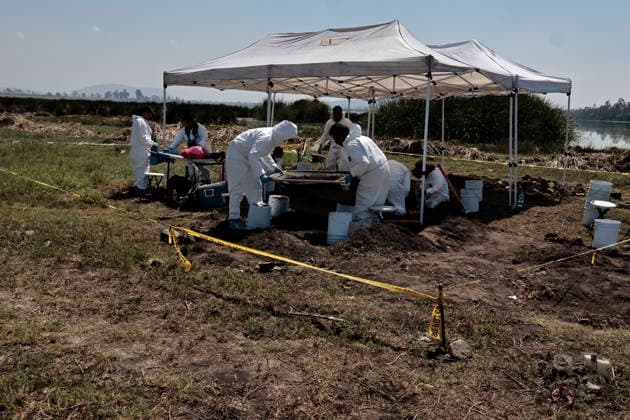
    April 14, 2026, Mexico City, Cdmx, Mexico: Between the borders of the Tlahuac region of Mexico City and Chalco, State of Mexico, lie the lagoons that divide these areas. Within a particular zone known as Lagunas de La Habana (Havana Lagoons), more than 500 human skeletal remains (teeth and bones from different parts of the body) have been found to date, buried in the mud at a very shallow depth. This is because it is a chinampa (floating garden) area, making it impossible that this area was used as a cemetery. The remains are found at a very shallow depth; after only 20 centimeters, the water reaches the lagoon. The search continues, carried out by personnel from the Attorney General s Offices, police, the National Guard, and the State - ZUMAp204 20260414_zip_p204_007 Copyright: xJosuexPerezx

  • April 14, 2026, Mexico City, Cdmx, Mexico: Between the borders of the Tlahuac region of Mexico City and Chalco, State of Mexico, lie the lagoons that divide these areas. Within a particular zone known as Lagunas de La Habana (Havana Lagoons), more than 500 human skeletal remains (teeth and bones from different parts of the body) have been found to date, buried in the mud at a very shallow depth. This is because it is a chinampa (floating garden) area, making it impossible that this area was used as a cemetery. The remains are found at a very shallow depth; after only 20 centimeters, the water reaches the lagoon. The search continues, carried out by personnel from the Attorney General s Offices, police, the National Guard, and the State - ZUMAp204 20260414_zip_p204_005 Copyright: xJosuexPerezx
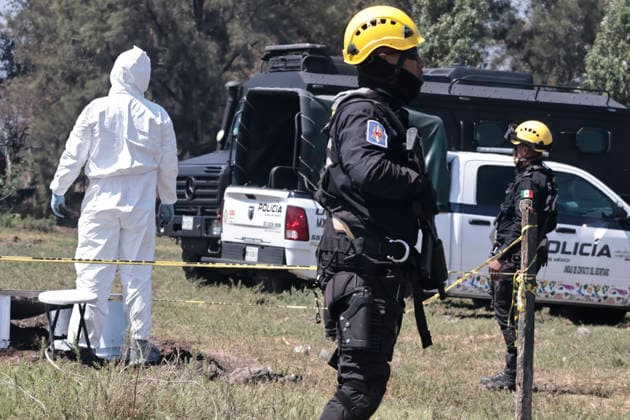
    April 14, 2026, Mexico City, Cdmx, Mexico: Between the borders of the Tlahuac region of Mexico City and Chalco, State of Mexico, lie the lagoons that divide these areas. Within a particular zone known as Lagunas de La Habana (Havana Lagoons), more than 500 human skeletal remains (teeth and bones from different parts of the body) have been found to date, buried in the mud at a very shallow depth. This is because it is a chinampa (floating garden) area, making it impossible that this area was used as a cemetery. The remains are found at a very shallow depth; after only 20 centimeters, the water reaches the lagoon. The search continues, carried out by personnel from the Attorney General s Offices, police, the National Guard, and the State - ZUMAp204 20260414_zip_p204_005 Copyright: xJosuexPerezx

  • April 14, 2026, Mexico City, Cdmx, Mexico: Between the borders of the Tlahuac region of Mexico City and Chalco, State of Mexico, lie the lagoons that divide these areas. Within a particular zone known as Lagunas de La Habana (Havana Lagoons), more than 500 human skeletal remains (teeth and bones from different parts of the body) have been found to date, buried in the mud at a very shallow depth. This is because it is a chinampa (floating garden) area, making it impossible that this area was used as a cemetery. The remains are found at a very shallow depth; after only 20 centimeters, the water reaches the lagoon. The search continues, carried out by personnel from the Attorney General s Offices, police, the National Guard, and the State - ZUMAp204 20260414_zip_p204_004 Copyright: xJosuexPerezx
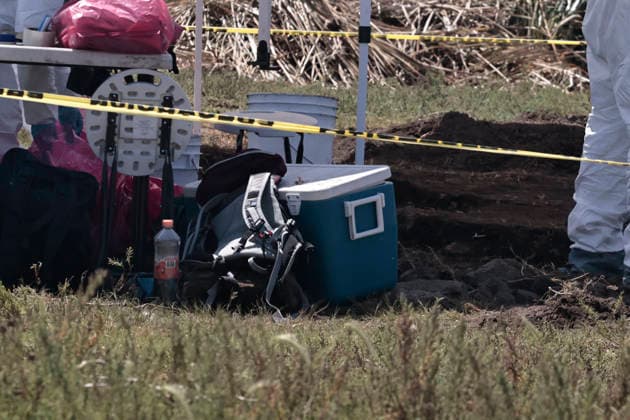
    April 14, 2026, Mexico City, Cdmx, Mexico: Between the borders of the Tlahuac region of Mexico City and Chalco, State of Mexico, lie the lagoons that divide these areas. Within a particular zone known as Lagunas de La Habana (Havana Lagoons), more than 500 human skeletal remains (teeth and bones from different parts of the body) have been found to date, buried in the mud at a very shallow depth. This is because it is a chinampa (floating garden) area, making it impossible that this area was used as a cemetery. The remains are found at a very shallow depth; after only 20 centimeters, the water reaches the lagoon. The search continues, carried out by personnel from the Attorney General s Offices, police, the National Guard, and the State - ZUMAp204 20260414_zip_p204_004 Copyright: xJosuexPerezx

  • April 14, 2026, Mexico City, Cdmx, Mexico: Between the borders of the Tlahuac region of Mexico City and Chalco, State of Mexico, lie the lagoons that divide these areas. Within a particular zone known as Lagunas de La Habana (Havana Lagoons), more than 500 human skeletal remains (teeth and bones from different parts of the body) have been found to date, buried in the mud at a very shallow depth. This is because it is a chinampa (floating garden) area, making it impossible that this area was used as a cemetery. The remains are found at a very shallow depth; after only 20 centimeters, the water reaches the lagoon. The search continues, carried out by personnel from the Attorney General s Offices, police, the National Guard, and the State - ZUMAp204 20260414_zip_p204_001 Copyright: xJosuexPerezx

    April 14, 2026, Mexico City, Cdmx, Mexico: Between the borders of the Tlahuac region of Mexico City and Chalco, State of Mexico, lie the lagoons that divide these areas. Within a particular zone known as Lagunas de La Habana (Havana Lagoons), more than 500 human skeletal remains (teeth and bones from different parts of the body) have been found to date, buried in the mud at a very shallow depth. This is because it is a chinampa (floating garden) area, making it impossible that this area was used as a cemetery. The remains are found at a very shallow depth; after only 20 centimeters, the water reaches the lagoon. The search continues, carried out by personnel from the Attorney General s Offices, police, the National Guard, and the State - ZUMAp204 20260414_zip_p204_001 Copyright: xJosuexPerezx

Kollektionen