Bilder in dieser Kollektion
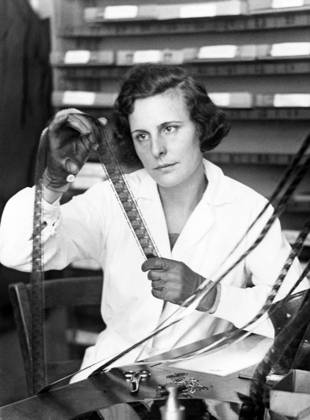
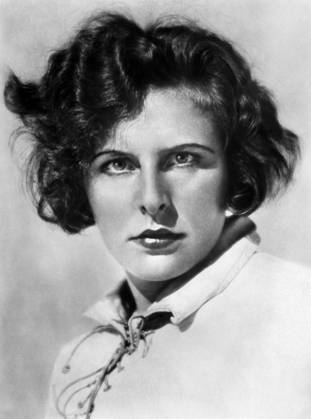
Germany: Leni Riefenstahl (1902-2003), working on the film Triumph of the Will , Berlin, 1934 Helene Bertha Amalie Leni Riefenstahl (22 August 1902 8 September 2003) was a German film director, producer, screenwriter, editor, photographer, actress, dancer, and propagandist for the Nazis. Copyright: xxPicturesxFromxHistoryx
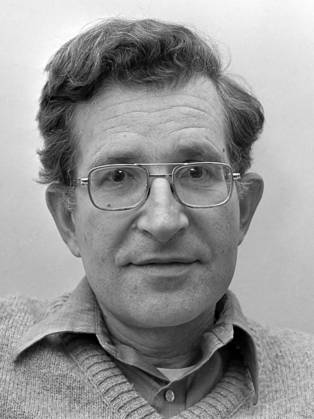
USA: Noam Chomsky (1928 - ), aged 49. Hans Peters, 1977 Avram Noam Chomsky (born December 7, 1928) is an American linguist, philosopher, cognitive scientist, logician, political commentator, social justice activist, and anarcho-syndicalist. Sometimes described as the father of modern linguistics , Chomsky is also a major figure in analytic philosophy.<br ><br > Chomsky has spent most of his career at the Massachusetts Institute of Technology (MIT), where he is currently Professor Emeritus, and has authored over 100 books. Copyright: xHansxPetersx xNationaalxArchiefxPicturesxFromxHistoryx
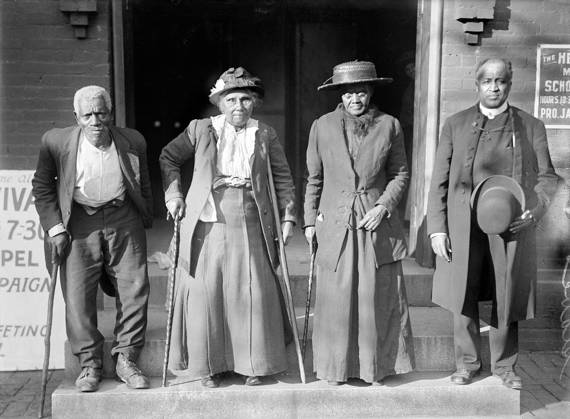
USA: Former Slaves Reunion. Left to right, Lewis Martin, age 100; Martha Elizabeth Banks, age 104; Amy Ware, age 103; Rev. Simon P. Drew, born free. Cosmopolitan Baptist Church, 921 N Street N.W., Washington DC, 1916 The Atlantic slave trade or transatlantic slave trade took place across the Atlantic Ocean from the 16th through to the 19th centuries. The vast majority of those enslaved that were transported to the New World, many on the triangular trade route and its Middle Passage, were West Africans from the central and western parts of the continent sold by western Africans to western European slave traders, or by direct European capture to the Americas.<br ><br > The numbers were so great that Africans who came by way of the slave trad Copyright: xxPicturesxFromxHistoryx
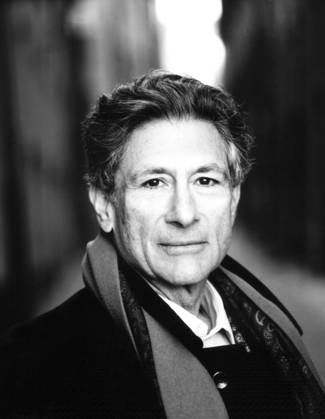
Israel Palestine USA: Edward Wadie Said (1935-2003), Palestinian American theorist, writer, philosopher and anti-imperialist. Publicity image, c. 1995 Edward Said is best known for the 1978 book Orientalism . In it, he analyses the cultural representations that are the basis of Orientalism, a term he redefined to refer to the West s patronizing perceptions and depictions of Middle Eastern, Asian and North African societies. He contended that Orientalist scholarship was, and remains, inextricably tied to the imperialist societies that produced it, which makes much of the work inherently political, servile to power, and thus intellectually suspect.<br ><br > As a public intellectual, Said discussed culture, literature, music and contemp Copyright: xxPicturesxFromxHistoryx
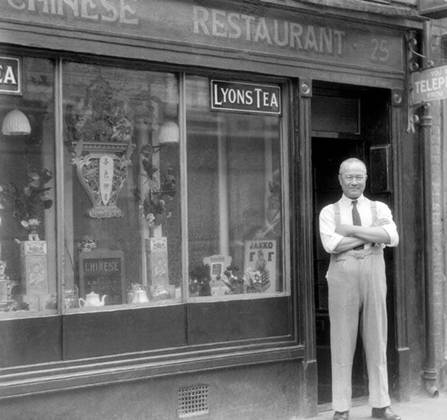
England, UK: The proprietor of a Chinese Restaurant at 25 Limehouse Causeway, Limehouse, east London, c. 1930 Limehouse, in Stepney, was London s first Chinatown.<The Chinese began settling in Limehouse before 1850, arriving as seamen or ship s launderers. By 1890 sailors from Shanghai were colonizing Pennyfields, Amoy Place and Ming Street, while those from Guangzhou (Canton) and southern China chose Gill Street and Limehouse Causeway, slightly further west.<br ><br > From the 1890s the Chinese community in the East End grew in size and spread eastwards, from the original settlement in Limehouse Causeway, into Pennyfields. The area provided for the Lascar, Chinese and Japanese sailors working the Oriental routes into the Port of London.<b Copyright: xxPicturesxFromxHistoryx
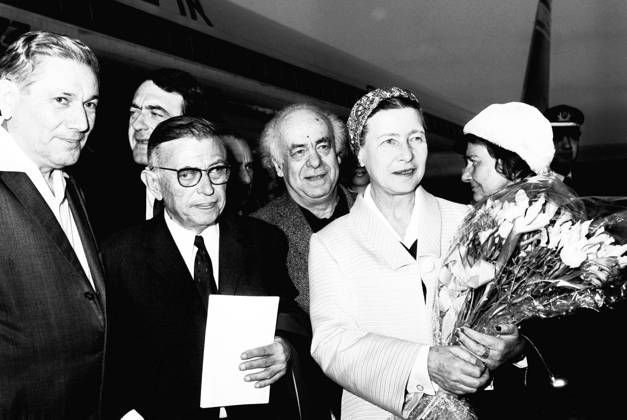
Israel Palestine: French philosophers Jean Paul Sartre and Simone De Beauvoir arriving at Lod Airport, 14 March 1967. Photo by Moshe Milner (CC BY-SA 3.0 License) Jean-Paul Charles Aymard Sartre (21 June 1905 15 April 1980) was a French philosopher, playwright, novelist, political activist, biographer, and literary critic. He was one of the key figures in the philosophy of existentialism and phenomenology, and one of the leading figures in 20th-century French philosophy and Marxism.<br ><br > Simone de Beauvoir (9 January 1908 14 April 1986), was a French writer, intellectual, existentialist philosopher, political activist, feminist and social theorist. Though she did not consider herself a philosopher, she had a significant influe Copyright: xMoshexMilnerx(CCxBY-SAx3.0xLicenxPicturesxFromxHistoryx
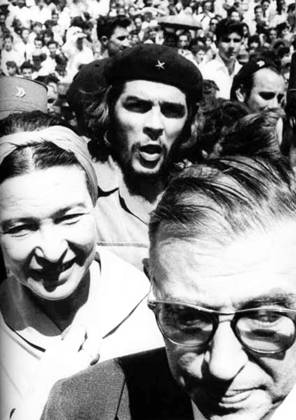
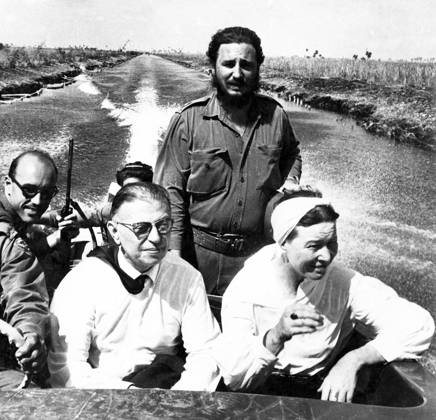
Cuba: Jean-Paul Sartre and Simone De Beauvoir with Ernesto Che Guevara on a busy street, Havana, 1960. Photo by Alberto Korda In 1960, Jean-Paul Sartre and Simone de Beauvoir visited Cuba during, as Sartre wrote, the honeymoon of the revolution . Military strongman Fulgencio Batista™s regime had fallen to Fidel Castro™s guerilla army and the whole country was alight with revolutionary zeal.<br ><br > When the couple returned to Paris, Sartre wrote numerous articles extolling the revolution. De Beauvoir, who was equally impressed, wrote, For the first time in our lives, we were witnessing happiness that had been attained by violence .<br ><br > De Beauvoir and Sartre would ultimately denounce Castro in an open letter that criticized Copyright: xAlbertoxKordaxPicturesxFromxHistoryx
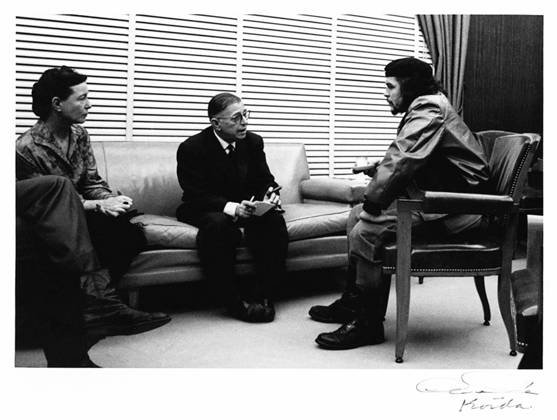
Cuba: Jean-Paul Sartre and Simone De Beauvoir meeting with Ernesto Che Guevara, Havana, 1960. Signed photograph by Alberto Korda In 1960, Jean-Paul Sartre and Simone de Beauvoir visited Cuba during, as Sartre wrote, the honeymoon of the revolution . Military strongman Fulgencio Batista™s regime had fallen to Fidel Castro™s guerilla army and the whole country was alight with revolutionary zeal.<br ><br > When the couple returned to Paris, Sartre wrote numerous articles extolling the revolution. De Beauvoir, who was equally impressed, wrote, For the first time in our lives, we were witnessing happiness that had been attained by violence .<br ><br > De Beauvoir and Sartre would ultimately denounce Castro in an open letter that criticiz Copyright: xAlbertoxKordaxPicturesxFromxHistoryx
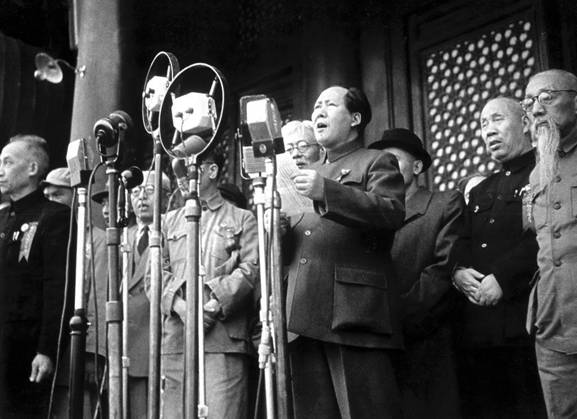
China: Chairman Mao Zedong announces the establishment of the People s Republic of China at Tiananmen Square, Beijing, on October 1, 1949 Mao Zedong, also transliterated as Mao Tse-tung (26 December 1893 9 September 1976), was a Chinese communist revolutionary, guerrilla warfare strategist, author, political theorist, and leader of the Chinese Revolution.<br ><br > Commonly referred to as Chairman Mao, he was the architect of the People s Republic of China (PRC) from its establishment in 1949, and held authoritarian control over the nation until his death in 1976.<br ><br > Mao s theoretical contribution to Marxism-Leninism, along with his military strategies and brand of political policies, are now collectively known as Maoism. Copyright: xxPicturesxFromxHistoryx